What to know about access problems for Ruislip waste collection
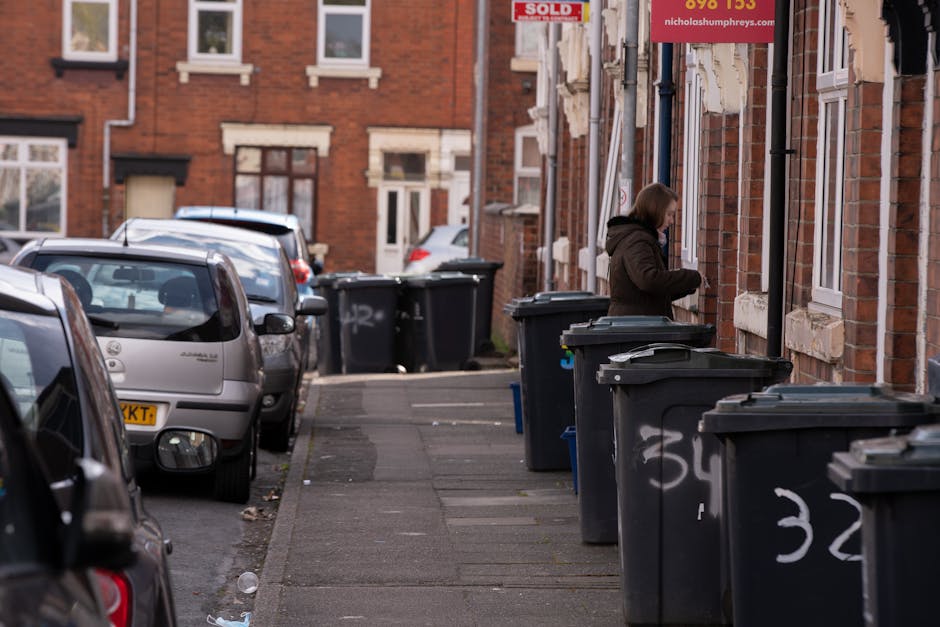
If you have ever watched a rubbish team arrive and then pause at a blocked drive, a tight alley, or a row of parked cars, you already know how quickly access problems can turn a simple collection into a frustrating delay. What to know about access problems for Ruislip waste collection is not just a logistics question; it affects timing, safety, cost, and whether your waste can be removed in one smooth visit or not.
In Ruislip, access issues are often practical rather than dramatic. A narrow street. A shared entrance. A basement flat with stairs. A van that cannot get close enough. Nothing glamorous, just real-world friction. The good news is that most of these problems can be handled with a bit of planning, the right information, and a clear idea of what the collection team needs before they set off.
This guide breaks down the main access barriers, why they matter, how collections are usually handled, and what you can do to avoid unnecessary delays. We will also look at compliance, useful preparation tips, and a few examples from everyday situations around Ruislip. Simple enough, really. But getting it right can save a lot of bother.
Why access problems matter for Ruislip waste collection
Access matters because waste collection is a moving job, not a desk job. The crew needs to park safely, reach the waste without causing damage, and leave the area clear enough to move on. If that cannot happen, the collection may be delayed, completed only partly, or rescheduled. That sounds obvious, but people often only realise it once the van has arrived and the clock has started ticking.
For homes and businesses in Ruislip, access problems can affect more than convenience. They can affect whether bulky items can be removed from upper floors, whether commercial waste can be taken from the rear of a property, and whether a same-day request remains possible. A locked gate or a cramped turning circle may sound minor, yet it can change the whole job.
There is also a safety angle. Waste crews handle heavy, awkward, and sometimes sharp items. If they have to drag these over long distances, up narrow steps, or around badly parked vehicles, the risk of injury and property damage rises. That is not just awkward; it is avoidable. And to be fair, nobody wants a broken banister or a scratched hallway floor because the access plan was a bit vague.
In local areas with mixed housing types, such as terraced streets, flats above shops, converted houses, and newer developments, access can vary from one address to the next. What looks easy on a map may feel very different in person. That is why clear information upfront is such a big deal.
Practical takeaway: good access planning keeps collections safer, quicker, and usually cheaper than trying to fix problems on the day.
How access problems are handled in practice
Most waste collection providers deal with access issues by assessing a few simple factors before the visit. Can a vehicle stop nearby? Is there a barrier, gate, keypad, or height restriction? How far is the waste from the vehicle? Are there stairs, narrow corridors, or shared entrances? These questions are not there to be difficult. They are there because the answers shape the whole job.
In practice, access can fall into a few broad categories:
- Easy access: the vehicle can park close to the waste, and the items are on the ground floor or in a straightforward location.
- Moderate access: the waste is reachable, but there may be stairs, a longer carry, a shared entrance, or limited parking.
- Restricted access: the team may need to plan around locked gates, tight lanes, no waiting zones, lifts, basements, or weight restrictions.
When access is restricted, the solution is usually not guesswork. It is communication. You may be asked for photos, a short description, or details about parking and entry points. That helps the crew bring the right vehicle, the right number of people, and the right equipment. A small detail like "the waste is down two flights of stairs at the back of the property" can save twenty minutes of confusion. Or more.
Sometimes the issue is not the property itself but the street outside. Ruislip has plenty of roads where parking can be tight at busy times, especially near high streets, station areas, and residential side streets. If a collection vehicle cannot safely stop close enough, the team may need to reposition, wait, or in some cases return later. That is why timing matters too. Early morning is often calmer than late afternoon, but it depends on the street.
One more thing: access problems can affect different waste types in different ways. A single sofa through a narrow hall is one thing. A full office clearance from a building with controlled entry is another. A fridge, a mattress, and a stack of builder's waste each create different handling needs. The bigger the load, the more important it is to describe the route clearly.
Key benefits and practical advantages
Dealing with access issues properly may not sound exciting, but it brings real benefits. The first is fewer delays. The second is a better chance of a one-visit collection. And the third, which people sometimes underestimate, is peace of mind. Once you have given the right details, you are no longer wondering whether the van will fit or whether the items can get out the door without drama.
Here are the main advantages:
- Faster collections: crews arrive with a clearer plan and spend less time figuring things out.
- Safer handling: less carrying over long distances or awkward obstacles means fewer accidents.
- Better cost control: fewer failed visits and fewer unexpected access complications.
- Less disruption: neighbours, tenants, staff, and customers are affected less when the collection runs smoothly.
- More suitable equipment: the right team, vehicle, or lifting method can be prepared in advance.
There is also a trust benefit. If you are arranging waste removal for a tenant, a business unit, or a property sale, showing that you have thought through access problems reflects well on you. It makes the whole process feel organised rather than rushed.
And honestly, that matters. Nobody enjoys standing in a hallway trying to explain, with a half-open door and a sofa wedged at an angle, that the side gate is "usually unlocked." Usually is doing a lot of work there.
Who this is for and when it makes sense
This guidance is useful for anyone arranging waste removal where the collection point is not immediately beside the vehicle. That could be a homeowner clearing the loft, a landlord dealing with a flat clearance, a shop manager with stockroom waste, or an office team getting rid of old furniture and confidential materials.
It is especially relevant if you are dealing with:
- top-floor flats without easy lift access
- basement storage or cellar items
- shared entrances or communal corridors
- narrow driveways or locked gates
- parked-car bottlenecks on residential streets
- commercial sites with security restrictions
- builder's waste stored in gardens or rear yards
- bulky items that need two-person lifting
It also makes sense if you are booking collections on behalf of someone else and do not know the site well. That happens a lot with letting agents, office managers, adult children helping parents clear a property, and tradespeople arranging cleanup after work is complete. If that is you, ask a few boring questions first. Boring is good here.
Some people only think about access after the quote has been given. Fair enough, life gets busy. But if the details change later, the collection may need adjusting. The earlier you raise it, the easier it is to match the job to the site.
Step-by-step guidance
When access might be an issue, the safest approach is to plan in a straight line: identify the barriers, describe them clearly, and make sure the collection team knows exactly what to expect.
- Walk the route from the waste to the vehicle point. Notice doors, gates, stairs, corners, height limits, and any obstacles that could slow the job down.
- Measure the awkward bits if needed. You do not need to produce architect-level drawings. But rough widths for gates, stairways, and corridors can be very helpful.
- Check parking and stopping space. Is there a loading bay, a permit zone, a red route, or a narrow street where stopping is tricky?
- Take photos from the collection route. A photo of the access point often explains more than a paragraph ever could.
- List the items that need moving. Bulkier items, fragile items, and heavy items all affect planning.
- Explain anything unusual. Intercoms, access codes, concierge desks, multiple floors, or restricted hours should be mentioned early.
- Confirm whether help is available on site. If nobody will be there, make sure the provider knows how access will work.
- Book a time that suits the street and the property. A quiet slot can make a proper difference in busy parts of the day.
One useful habit is to think like the crew for sixty seconds. If you were carrying a heavy wardrobe or a pile of office chairs, what would get in your way first? Often that simple question reveals the problem. A tiny step, but it helps.
If the access route includes stairs or long carries, tell the team whether the surfaces are carpeted, tiled, uneven, or outside. That sounds minor, yet it affects how items are lifted and protected. If the job involves a garden path, muddy ground after rain can turn things messy quickly. A damp London morning has a way of making a neat plan feel less neat.
Expert tips for better results
After handling plenty of awkward clearances, one pattern becomes obvious: the best jobs are usually the ones where the access detail is shared early and plainly. Not dramatically. Just plainly.
Here are a few practical tips that really help:
- Send photos before the visit. A snapshot of the gate, stairs, parking spot, or alleyway can remove doubt.
- Be specific about the heaviest items. A small stack of bags is very different from a large cabinet or American-style fridge.
- Warn about shared spaces. Communal hallways, office receptions, and customer entrances need a little extra care.
- Keep the route clear on the day. Move bins, bikes, boxes, and loose clutter if you can.
- Allow a bit of buffer time. Access jobs rarely fail because of one giant issue. More often it is three small ones at once.
- Think about weather. Rain, ice, and darkness all make narrow access more awkward.
If your site has security controls, provide the exact process. "Someone will let you in" is not ideal. Better is: "Ring the side door buzzer, ask for reception, and give the code if nobody answers." Clear beats clever every time.
Another tip: if there is a chance of a difficult lift, do not wait until the last minute to say so. That is how jobs end up needing extra hands. Truth be told, nobody likes a surprise staircase when they are already holding a bulky item.
For recurring collections, keep a simple note of what worked last time. Which gate was used? Where did the vehicle stop? Was parking easier before 9 a.m.? Little notes become very useful later. Almost annoyingly useful.
Common mistakes to avoid
Most access problems are manageable, but a few common mistakes keep causing avoidable headaches. The first is assuming the collection team will "just sort it out" on arrival. Sometimes they can. Sometimes they cannot. It depends on the property and the street, not optimism.
Other mistakes include:
- Underestimating the carry distance: what feels like a short walk from your front door can be much longer with heavy waste.
- Forgetting about rear access: many homes and businesses in Ruislip have a better back route than front entry, but only if the team is told about it.
- Not mentioning staircases: stairs matter a lot for bulky items and repeated trips.
- Blocking the route with belongings: even a narrow pile of boxes can turn a clear corridor into a problem.
- Assuming parking will be available: streets look very different at school run time, lunchtime, and evening.
- Leaving access codes or keys until the last minute: that can waste the best part of a visit.
A quieter mistake is giving vague instructions because you do not want to sound difficult. But precision is not being difficult. It is helpful. "The waste is in the garage at the bottom of the drive, and the drive narrows near the gate" is a brilliant instruction. It saves everybody time. No fuss.
One more thing to avoid: asking for a quick collection without saying the site is awkward, then expecting no change in service. A fair provider can only plan based on the details given. If the details change, the job may change too. That is normal.
Tools, resources and recommendations
You do not need specialist equipment to manage access well, but a few simple tools make a difference. A phone camera is probably the most useful one. Photos from the property entrance, the waste location, and the route between them can tell the story in seconds.
These are worth having to hand:
- Phone photos or a short video: useful for showing gates, corridors, stairs, and parking limits.
- Rough measurements: tape measure data for doors, stair widths, and bulky items.
- Access notes: door codes, concierge instructions, loading times, or restrictions.
- Item list: especially for furniture, appliances, and mixed loads.
- Building rules: some flats, offices, and managed sites have time windows or booking requirements.
If you need more than a single item removal, it can help to look at related service pages that match the job type. For example, furniture clearance is useful when bulky household items are involved, while office clearance is a better fit for workplaces with desks, chairs, and equipment to remove. If the job is broader than a single item, waste removal gives a wider view of how mixed loads are handled.
For heavier or more awkward domestic jobs, it is also worth looking at house clearance and flat clearance, since access issues often differ between those two. A house with a side passage is one thing; a fourth-floor flat with a narrow staircase is another entirely.
If you are dealing with a single bulky item, the practical route may be more straightforward. A sofa, mattress, or appliance can often be planned around fairly quickly if the access details are clear. If not, well, the van arrives and everyone starts improvising. Never ideal.
Law, compliance, standards and best practice
Waste collection in the UK sits within a wider framework of duty of care, safe handling, and responsible disposal. You do not need to become a legal expert to book a collection, but it helps to understand the basics. Waste should be handled in a way that protects people, property, and the environment, and the people collecting it should work in line with sensible safety procedures.
From a practical point of view, access problems touch three main areas:
- Health and safety: awkward lifting, blocked exits, poor lighting, and slippery surfaces increase risk.
- Property protection: narrow hallways, stair rails, walls, and floors need care.
- Responsible disposal: the collection method should support proper sorting, reuse where possible, and lawful disposal routes.
It is also sensible to think about insurance and site responsibility. If a building has managed access, security controls, or communal areas, make sure the collection plan fits the site rules. That can include notification to residents, loading instructions, or timing limits. If you are arranging a collection on behalf of a landlord, business, or managing agent, keep a record of the instructions you gave. It is just good housekeeping.
Best practice is straightforward: describe the access honestly, do not overpromise, and make sure the collection team can work safely without improvising around hidden obstacles. If a route feels unsafe, it should be reassessed. That is not awkward; that is sensible.
You can also review related company policies if you want a better feel for how a provider approaches safety and responsibility. Pages such as health and safety policy, insurance and safety, and recycling and sustainability help show the broader standards behind the service.
Options, methods and comparison table
Not every access issue needs the same solution. Sometimes the fix is as simple as changing the time of collection. Other times you need a different approach because the route, load, or building layout is just not friendly to a standard pickup. Here is a practical comparison to help you think it through.
| Approach | Best for | Strengths | Limitations |
|---|---|---|---|
| Standard curbside collection | Items close to the road or driveway | Simple and quick | Not suitable for difficult parking or long carries |
| Pre-planned assisted collection | Homes, flats, and small businesses with moderate access limits | Better coordination and clearer expectations | Needs accurate site details in advance |
| Extra-hand clearance | Heavy, bulky, or awkward items | Improves safety and handling | May require more time and planning |
| Timed access slot | Busy streets, managed buildings, commercial sites | Reduces parking and entry conflicts | Less flexible if the slot is missed |
| Alternative entry route | Properties with rear lanes, side gates, or service entrances | Can solve front-access problems neatly | Only works if the route is usable and shared clearly |
The right method depends on the site, the items, and the level of access control. In some cases, the best answer is surprisingly simple: move the waste closer to the access point before the team arrives. In others, the job needs a more structured plan, especially when the collection involves multiple bulky items or a business premises with restricted entry.
If you are unsure whether a standard collection will work, it is usually better to describe the worst part of the route rather than the easiest. That sounds backward, but it helps avoid disappointment. No one regrets being too clear about the staircase.
Case study or real-world example
Here is a realistic example. A homeowner in Ruislip needs two wardrobes, a broken chest of drawers, and a mattress removed from a first-floor flat above a small parade of shops. The front of the building has limited parking, the rear access is shared, and the stairwell is narrow with a turn halfway down.
If the booking is made with only the words "furniture removal from flat," the team may arrive without enough detail to plan properly. But if the customer explains that the access is via one internal staircase, that parking is tight before 10 a.m., and that the mattress is the widest item, the job can be scheduled with the right approach.
In practice, that might mean choosing a quieter arrival window, ensuring two people are allocated to the lift, and planning a parking spot on the nearest side road rather than directly outside. The collection is still possible. It just runs better because the awkward bits were named upfront.
A similar situation comes up with office clearances. An office in a mixed-use building may have lift access, but only during staffed hours and only after signing in at reception. If the team knows this, the furniture can be moved efficiently. If they do not, well, they stand at the desk, phone in hand, trying to locate someone who has gone for lunch. It happens more than you would think.
The point is not that access problems are rare. The point is that they are manageable when described accurately. That is the difference between a smooth job and a stressful one.
Practical checklist
Use this checklist before your collection day. It is short on purpose.
- Have I checked the full route from waste to vehicle?
- Have I mentioned stairs, gates, narrow corridors, or basements?
- Have I explained parking limits or stopping restrictions?
- Have I shared access codes, keys, buzzers, or reception steps?
- Have I listed bulky, heavy, or awkward items separately?
- Have I sent photos if the access looks tight?
- Have I cleared the route of bins, bikes, boxes, and loose clutter?
- Have I confirmed the best time of day for the street or property?
- Have I checked whether the building has any rules or time windows?
- Have I kept notes in case I need another collection later?
If you can tick most of those off, you are probably in good shape. If not, no panic. Just fill in the gaps before the day arrives. That small bit of prep often makes all the difference.
Quick expert summary: the more clearly you describe the access route, the less likely you are to face delays, surprise costs, or awkward lifting. Clear notes beat hopeful assumptions every time.
Get a free quote today and see how much you can save.
Conclusion
Access problems for Ruislip waste collection are rarely dramatic, but they can be disruptive if they are not planned for. Narrow streets, stairwells, gated entries, shared corridors, and awkward parking all create small barriers that add up. The good news is that most of them can be managed with a bit of honesty, a few photos, and a clear description of the route.
If you remember one thing, make it this: the job becomes much easier when the collection team knows the real conditions before they arrive. That is especially true for bulky, heavy, or time-sensitive removals. A few minutes spent on access details can save a lot of stress later on. And let's face it, waste collection is one area where boring details are the helpful kind.
Whether you are clearing a flat, emptying an office, or dealing with mixed household waste, a sensible access plan helps keep the day calm, safe, and efficient. Small preparation, big difference. That is the whole story, really.
Frequently Asked Questions
What counts as an access problem for waste collection?
An access problem is anything that makes it hard for the collection team to reach the waste safely and efficiently. That might be a locked gate, narrow staircase, restricted parking, a long carry distance, or limited building entry.
Should I mention access issues before booking?
Yes. The earlier you mention them, the easier it is to plan the right vehicle, timing, and crew. Early notice usually prevents delays and avoids awkward surprises on the day.
Do photos help with difficult access?
They help a lot. A few clear photos of gates, stairs, parking, and the route from the waste to the street often explain the situation far better than a long message.
What if the van cannot park directly outside my property?
That does not always stop the collection, but it may affect the time needed and the route the team uses. If parking is tight, say so in advance and suggest nearby options if you know them.
Can waste still be collected from a flat with no lift?
Often, yes, but the handling needs to be planned carefully. Stair height, turn points, and item size all matter. It is best to be clear about the floor level and how wide the stairs are.
Will access problems increase the cost?
They can, depending on the amount of extra labour, time, or planning required. Not every awkward property costs more, but difficult access can affect the quote if extra work is needed.
What should I do if there is a rear entrance or side gate?
Tell the collection team about it. Sometimes the back route is much easier than the front. Just make sure you explain how to reach it, whether it is locked, and who has the key or code.
What items are hardest to move through narrow access?
Large sofas, wardrobes, mattresses, appliances, and office furniture are often the trickiest. Their size, weight, and shape can make tight turns or stairs difficult.
How can businesses reduce access issues?
Businesses can help by booking a timed slot, keeping loading areas clear, notifying reception, and giving site maps or entry instructions. A little admin upfront usually pays off.
What if the access turns out to be worse than expected?
The collection may need to be adjusted, delayed, or partially completed depending on safety and feasibility. That is why honest descriptions and photos are so useful before the visit.
Is there a difference between home and office access problems?
Yes. Home collections often involve stairs, hallways, or garden routes, while office collections may involve reception desks, security checks, lifts, and building rules. Both need planning, but the obstacles are different.
Where can I check more service details before arranging a collection?
You can review the company's service pages for a better sense of how different collection types work, including furniture, office, and general waste services. That helps you match the job to the right approach.