Recycling and Sustainability — Commercial Waste Ruislip
Welcome to our overview of how Commercial Waste Ruislip is being managed to support an eco-friendly waste disposal area and a truly sustainable rubbish area. This page sets out the practical measures, strategic targets and partnerships that make Ruislip a leader in responsible commercial waste management. We describe how businesses can align with borough separation schemes, make use of local transfer stations, and benefit from reuse chains that reduce landfill and lower carbon emissions.Borough approach to separation and practical sorting
Ruislip commercial waste collection follows the broader London Borough approach to waste separation: clear segregation of dry recyclables, glass, paper and card, food and organic waste, and residual refuse. For many businesses this means on-site segregation stations that mirror household systems, with designated bins for mixed dry recycling and separate containers for organic or food waste. By mirroring household-style streams the borough encourages higher capture rates of recyclable materials from offices, shops and light industrial premises, helping the local economy harvest more reusable material.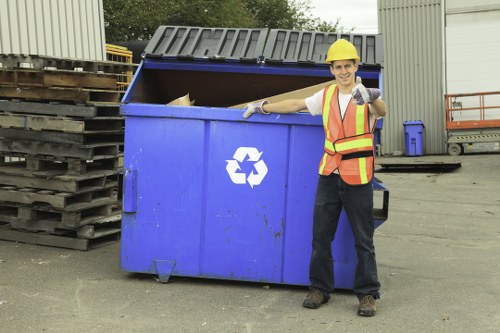 Recycling percentage target: our ambition for the commercial sector is to reach a 65% recycling rate by 2030. This recycling percentage target applies to combined commercial and municipal streams that pass through local processing facilities. Hitting this target will require stronger segregation at source, increased reuse partnerships and improved capture of organics and food waste from cafés and restaurants across Ruislip. The target is deliberately ambitious to drive investment in sorting, education and low-carbon logistics.
Local transfer stations and material flows
Commercial rubbish in Ruislip is consolidated at nearby transfer stations that serve the borough and neighbouring areas. These transfer hubs are essential to an eco-friendly waste disposal area model: they allow loads to be bulked, pre-sorted and redirected to specialised processors — for example anaerobic digestion plants for food waste, materials recovery facilities (MRFs) for mixed dry recycling, and dedicated glass and metal recycling lines. Using local transfer stations reduces road miles compared with multiple small trips to distant facilities and helps maintain traceability of material flows back into the circular economy.
Partnerships with charities and reuse organisations
One of the most effective routes to reducing commercial waste destined for disposal is reuse. Ruislip commercial waste services work closely with local and national charities to divert usable items from the waste stream. Our reuse network includes office furniture reclamation schemes, textiles charities and appliance refurbishers. Typical partnerships include:- Local charity hubs that accept office furniture and equipment for resale or free redistribution;
- Textile and clothing collectors partnering with social enterprises that sort and repair garments;
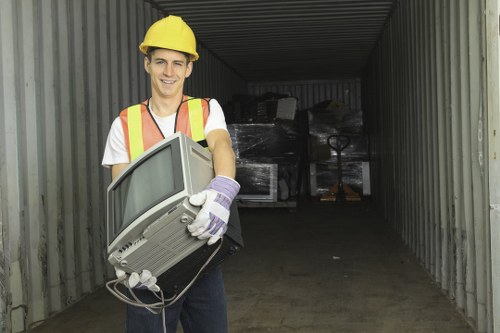
- Electronic refurbishers that take functional IT equipment, wipe data securely and recirculate items to community projects.
These collaborations extend the life of products and create social value while lowering the embodied carbon of business operations.
Low-carbon vans and sustainable collection fleets
To support a low-emission commercial waste system in Ruislip we have been transitioning collections to a fleet of low-carbon vans and trucks. The fleet mix includes electric vans for short urban rounds, plug-in hybrids for mixed-distance routes, and optimised rigid vehicles for busy high-volume days. Route planning software reduces empty running and concentrates collections around transfer station timetables, which together cut fuel use and emissions across the commercial collection network.Operational measures include scheduled charging infrastructure at depot locations, driver training in energy-efficient driving, and consolidation of small loads at local transfer points so that fewer long-haul movements are needed. These steps are central to creating a credible sustainable rubbish area for businesses in Ruislip and neighbouring boroughs.
 Measuring success and continuous improvement
Performance tracking is essential: we monitor tonnages by material type, capture rates from commercial clients, contamination levels in mixed recycling and carbon intensity per tonne collected. Regular reporting helps identify where extra engagement or changes in containerisation are needed. Data-driven reviews also reveal opportunities to expand organics collections for hospitality businesses and to increase commercial capture of glass and mixed recyclables that often slip into residual streams.
Making the transition: what businesses can do
For Ruislip businesses looking to align with the sustainable rubbish area vision, practical steps include improving on-site segregation, switching to reusable packaging where possible, donating surplus items to charity partners and choosing collection contractors with low-carbon fleets. Collaboration is key: by working with transfer stations, reuse charities and accredited processors, commercial operators can reduce disposal costs and shrink their environmental footprint. The shared aim is to make Ruislip an exemplar of how commercial waste services support circular economy outcomes and deliver a resilient, low-carbon future.In summary, the combination of an ambitious recycling percentage target, strong reuse partnerships, efficient transfer station logistics and a modern low-emission collection fleet sets a clear path for Commercial Waste Ruislip. Through sustained effort and cooperation across businesses, charities and processing partners, the borough can achieve higher recycling rates, meaningful carbon reductions and a truly sustainable approach to commercial rubbish management.
